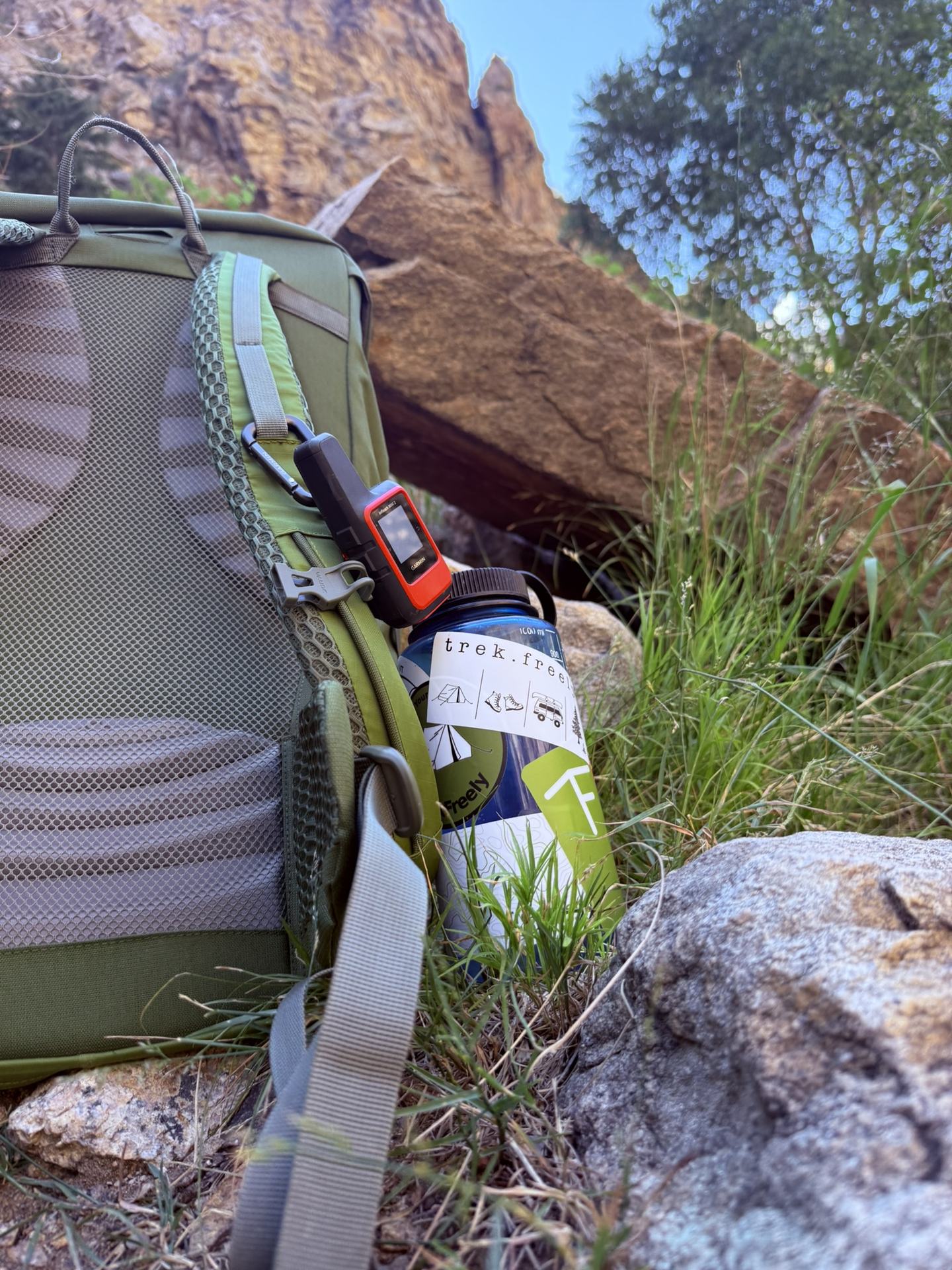
In the last post we said your phone's satellite features are a real safety net, but not a replacement for a device built for the job. This is the post about that device.
If you spend time in the backcountry, we think you should carry something that can call for help from anywhere, and specifically something that can talk back. That's our key argument, and the rest of this post is why we believe it and how to act on it. We'll walk through how these devices work, the categories they fall into, the models worth knowing about, and how to choose. We're not here to sell you a brand, just to convince you to carry one.
"My phone is fine" and other things that get people hurt
Two ideas generally keep capable people from carrying a real device. The first is that a modern phone is enough and the second is that the places they go are too popular or too close to home to need one. Both feel reasonable, but both fall apart the moment you actually need help.
The phone argument we covered last time. Satellite messaging on an iPhone or Pixel is useful, but it depends on a charged, undamaged phone, a clear view of the sky, and the patience to aim, and it gives you a thin, mostly one-directional channel when it works. It's a backup and shouldn't be treated as the primary plan.
The popularity argument is the more dangerous one, because it feels like local knowledge. The truth is that a busy trailhead doesn't mean cell coverage, and a popular trail doesn't mean fast help. Most backcountry injuries are ordinary: a rolled ankle a few miles in, a slip on wet rock, a sudden storm, a medical problem that has nothing to do with how remote you are. Popularity doesn't catch you when you fall, and it doesn't carry a signal. Plenty of serious incidents happen within a couple of miles of the car.
The scale of this is easy to underestimate. In 2025 alone, NOAA's satellite system helped rescue 300 people in the United States, and the international network behind it has supported more than 63,000 rescues since 1982. Garmin's emergency team logged over 3,000 satellite SOS calls from inReach devices worldwide in a single year, and about one in three of those required a helicopter. These aren't rare events happening to unprepared strangers. They're ordinary trips that turned, and the people involved got a message out because they were carrying something that could send one.
A busy trailhead isn't coverage, and a popular trail isn't fast help.
Why two-way is the difference
This is what we care about most. Not all of these devices are equal, and the line that matters is whether yours can hold a conversation.
A one-way device sends a single message: someone at these coordinates needs help. That's it. Whoever receives it has to assume the worst, because they have no way to know if you have a broken leg, a heart problem, or simply ran out of food and want a ride out. So they send everything. A full response gets launched into uncertainty, often putting a helicopter crew or a volunteer ground team at real risk, for a situation that might not have needed it.
A two-way device changes that completely. You can tell responders what's actually wrong, how many people are involved, whether anyone's bleeding or unconscious, and exactly where you are. They can size the response to reality instead of the worst case, send guidance while help is on the way, and sometimes decide that no rescue is needed at all.
That last point isn't theory. In Garmin's own 2025 review of inReach emergencies, more than one in eight incidents, over 12 percent, were resolved entirely through two-way messaging, with no helicopter, ground team, or ambulance dispatched. A coordinator talked the person through it, corrected a navigation mistake, or walked them through a minor medical issue over satellite text. Every one of those is a rescue that didn't have to put anyone else at risk. A one-way beacon can't do that. It only knows how to shout.
There's a second reason two-way matters, and it's the one closest to what we build. A two-way device lets the people at home stay in the loop. You can send a check-in that says you're fine, or share a track they can follow. When something's wrong, they learn the truth instead of imagining it. That's the difference between a family waiting in silence and a family that knows.
How these devices actually work
Strip away the branding and there are three categories.
Two-way satellite messengers are the main event. They send and receive text messages over a commercial satellite network, share your location on a map, pull down weather, and include an SOS that reaches a private, 24/7 monitoring center. That center reads your messages, coordinates with the local search and rescue agency for wherever you are, and stays with you until help arrives. These require a subscription, the same way a phone does, because you're paying for airtime on the satellite network and for the monitoring service behind the SOS button.
One-way messengers look similar but only transmit. You can send preset check-ins and trigger an SOS, but you can't receive a reply. They're cheaper and simpler, and they're a real step up from nothing, but they carry the one-way limitation described above.
Personal locator beacons, or PLBs, are a different animal. They run on the government-operated COSPAS-SARSAT network, the same system that handles distress signals for ships and aircraft worldwide. There's no subscription and no monthly fee. You buy the beacon, register it for free with NOAA, and it sits in your pack for years. When you trigger it, it broadcasts a powerful distress signal with your GPS location straight to government search and rescue authorities. PLBs are one-way and do nothing but call for help, but they do that one job with more transmit power and more reliability than anything else on this list, and their batteries sit ready for five years.
The network matters too. Garmin inReach and ZOLEO run on Iridium, which covers the entire globe, poles included. SPOT runs on Globalstar, which covers most of where people go but has real gaps in polar and some ocean regions, so it's worth checking coverage for where you actually travel. PLBs use the international government network, which reaches everywhere. When a beacon with GPS goes off, that system can pin your location to within about 100 meters and start a response in as little as a few minutes.
The devices worth knowing
You don't need to memorize a spec sheet. A handful of devices cover almost everyone, and they group naturally by what they do.
Garmin inReach is the benchmark for two-way messaging. The inReach Mini 2 and the newer Mini 3 are compact, rugged, and run on the global Iridium network, with an interactive SOS that reaches Garmin Response, Garmin's in-house emergency team that has been coordinating rescues since 2007. They handle two-way texts, share your location through Garmin's MapShare tracking, and pull weather. They also last many days on a charge. Typing on the tiny device is slow, so most people pair it with the free Garmin Messenger app and type on their phone, while the device handles the satellite link. The Messenger and Mini 3 Plus models add photo and voice messages over satellite. All of them need a subscription, and every plan includes the SOS.
ZOLEO takes a phone-first approach and tends to cost less up front. The device is a rugged puck that pairs with your phone over Bluetooth, and the free ZOLEO app becomes your inbox, complete with its own dedicated SMS number and email address. It automatically routes your messages over cellular, Wi-Fi, or satellite depending on what's available, which makes the experience feel close to normal texting. The device has physical SOS and check-in buttons that work on their own even if your phone is dead, though the full two-way messaging depends on your phone being connected. Its SOS reaches a 24/7 monitoring center, and it runs a long time on a charge. There's no built-in navigation, so it leans on your phone for the extras.
SPOT offers two very different devices. The SPOT Gen4 is a simple, affordable one-way unit that sends check-ins, tracks your location for people following along, and has an SOS button, but it can't receive messages. It's close to a modern take on a beacon. The SPOT X adds true two-way messaging with a physical keyboard so you can type without a phone. Both run on the Globalstar network, so check coverage for your area before committing.
ACR ResQLink is the PLB most land travelers reach for. Models like the ResQLink 400 and the ResQLink View are subscription-free beacons on the government network, with a transmitter far more powerful than a messenger or a phone, a battery good for five years, and a build meant to survive being ignored in the bottom of your pack until the day you need it. Register it with NOAA when you buy it, which is free and legally required, and understand that it's a last-resort tool. There's no texting and no tracking. You pull the antenna, point it at the sky, and press the button when the situation is grave.
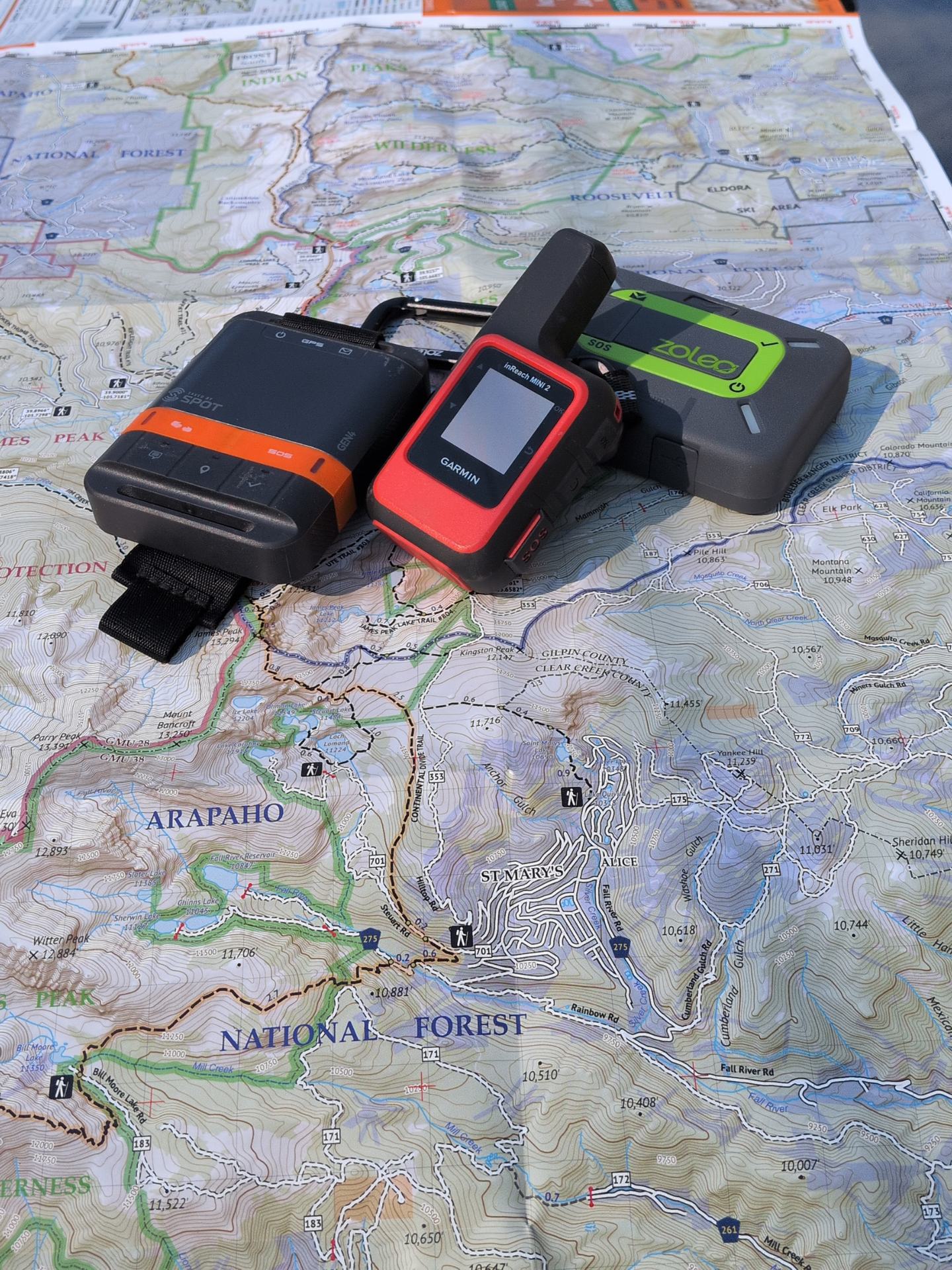
Two that can talk back, and one that can only transmit. That difference is the whole decision.
So which one should you carry?
Our answer, for almost everyone who goes into the backcountry, is simple: carry a device with two-way messaging. That single capability is what lets responders help you correctly, lets a bad situation get resolved without a full rescue, and keeps the people at home informed instead of afraid. If you buy one thing, buy something that can talk back.
For most people that means a Garmin inReach or a ZOLEO. The inReach is the common pick for anyone who wants a proven, standalone device on the most reliable network, especially deep-backcountry and solo travelers. ZOLEO is the value choice for people who are happy running everything through their phone and want the lowest cost of entry. The SPOT X is a two-way option if you prefer its keyboard and its coverage works for you. These are soft suggestions, not endorsements, and any of them beats carrying nothing.
Where does that leave the PLB? In a real and respected place. A PLB is the most reliable pure SOS you can carry, it never needs a subscription, and it'll sit ready for years. For some people, especially those who want maximum reliability with zero ongoing cost, or who want a bombproof backup to their messenger, a PLB earns its spot in the pack. Plenty of experienced people carry both: a messenger for everyday communication and right-sized help, and a beacon as the last word when everything else fails. What we'd steer you away from is carrying only a one-way device as your single line to the outside world, when a two-way one does so much more for the same trip.
Whatever you choose, the device only works if you finish the job. Charge it, subscribe or register it, learn to use it before you leave, and actually clip it to your pack. The best satellite device in the world does nothing sitting on a shelf at home.
The device is only half of it
A satellite messenger solves one side of the problem. It gets a message to the responders who come find you. It does not, on its own, make sure the people at home have your plan, and that side matters just as much.
This is where your device and your trip portfolio work together. Two of the devices above, Garmin inReach and SPOT, can feed their live location straight into your TrekFreely trip portfolio today. That means the track your device is already sending shows up on the same page your emergency contact is watching, alongside your route, your vehicle, and the step-by-step plan for what to do if you go overdue. Your messenger reaches the professionals. Your portfolio reaches the people who love you. Together they cover the whole picture, which is exactly what we're trying to build.
So carry a two-way device, and put your plan somewhere the people at home can find it. Do both, and you've closed the gap that leaves families guessing and search teams starting from scratch.
Buy it once, carry it always
A dedicated satellite device is one of the few pieces of gear that can change how an emergency ends. It's also one of the easiest to talk yourself out of, because most trips end fine and the cost feels like insurance against something that won't happen to you. It happens to hundreds of people a year who thought the same thing.
Get one that can talk back. Set it up, practice with it, and clip it on. Share your plan through your portfolio so the people at home are covered too. Then go do the thing you came for, with a lot less between you and help than you had yesterday.
References
The device details and rescue figures in this post come from these public sources. Specs, plans, and coverage change often, so check the official pages before relying on any detail.
-
NOAA, "NOAA satellites helped rescue 300 people in 2025." https://www.noaa.gov/news-release/noaa-satellites-helped-rescue-300-people-in-2025
-
NOAA SARSAT, U.S. rescue totals and program overview. https://www.sarsat.noaa.gov/ and https://www.nesdis.noaa.gov/data-products-research-services/search-rescue
-
Garmin, "2025 inReach SOS year in review" (SOS volume, helicopter rate, and the share resolved by two-way messaging). https://www.garmin.com/en-US/blog/outdoor/2025-inreach-sos-year-in-review/
-
Garmin, inReach Mini 2 and subscription plan overview. https://www.garmin.com/en-US/p/765374/ and https://www.garmin.com/en-US/blog/outdoor/overview-inreach-subscription-plans/
-
ZOLEO, satellite communicator features and plans. https://www.zoleo.com/en-us/satellite-communicator and https://www.zoleo.com/en-us/plans
-
SPOT (Globalstar), SPOT Gen4 (one-way) and SPOT X (two-way). https://www.findmespot.com/en-us/products-services/spot-gen4 and https://www.globalstar.com/en-us/products/spot-for-business/spot-x
-
ACR, ResQLink 400 and ResQLink View personal locator beacons (COSPAS-SARSAT, no subscription). https://www.acrartex.com/products/resqlink-400/ and https://www.acrartex.com/products/resqlink-view/
-
COSPAS-SARSAT vs. commercial messenger networks and the two-way response distinction: Treeline Review and OutdoorGearLab satellite messenger and PLB testing. https://www.treelinereview.com/gearreviews/best-personal-locator-beacons