About TrekFreely
Who we are, where we started, and why everything we build is free.
How we got here
TrekFreely started as a website for sharing free campsites across the US. It seemed like a good idea at the time — help people find places to camp without paying for a spot. But we shut it down after stepping back and taking an honest look at what we were building. Amplifying campsite locations in sensitive wildland areas does more harm than good. More traffic to fragile places means more damage to them. The land matters more than the convenience.
In early 2026, we started over, forming a new nonprofit built around a different mission — the structure that best reflects what we are here to do. We built TrekFreely because we repeatedly saw gaps in the community that needed to be filled. Anyone who spends time in the backcountry knows the problem: your trip information is scattered across half a dozen places. Your route is in one app, your emergency contacts are in your phone, your gear list is in a note somewhere, and the person waiting for you at home has maybe a rough idea of where you went and when you should be back. If something goes wrong, nobody has the full picture — not your family, not Search and Rescue, not anyone.
We started building TrekFreely to fix that. Not to replace the tools people already use to plan trips, but to bring all of that information together into a single place that the people at home can actually access and understand. And along the way, we realized we could also do something about the other half of the problem — the scattered, inconsistent resources that people have to piece together on their own just to plan a safe trip in the first place.
That is how TrekFreely became two things: a collection of free resources for backcountry trip planning and a trip portfolio that keeps the people connected to every trip informed.
What we believe
Guided self-sufficiency
We give you the tools to find the answer yourself, not the answer itself. Every resource comes with context — what it is, when you would use it, and why it matters. There is a version of helpfulness that makes you more dependent over time. We are not interested in building that. We want you to come back from a trip knowing more than when you left.
Simple for everyone
A tool should work for the person in the field under stress and for the person at home who has never set foot on a trail. Outdoor experience, technical skill — none of that should be a barrier. If a safety tool takes more than a moment to figure out, it needs to be simpler.
Stewardship
Safety and stewardship are the same conversation. When you are prepared, you leave less trace, make better decisions, and are less likely to need a rescue. We are here to help you take better care of the land, not to send more traffic to places that are already overwhelmed.
Free, always
Every tool we build is free. No freemium tiers. No premium upgrades. No "pro" plans behind a paywall. If it exists on this platform, you can use it. That is a permanent decision, not a launch strategy.
Privacy-first
No third-party analytics, no tracking pixels, no data harvesting. Location data is deleted when your trip ends. Your data belongs to you — we are not building a business on top of it. The founder comes from a cybersecurity background, and privacy is treated as a design requirement here, not a policy checkbox.
About the Founder
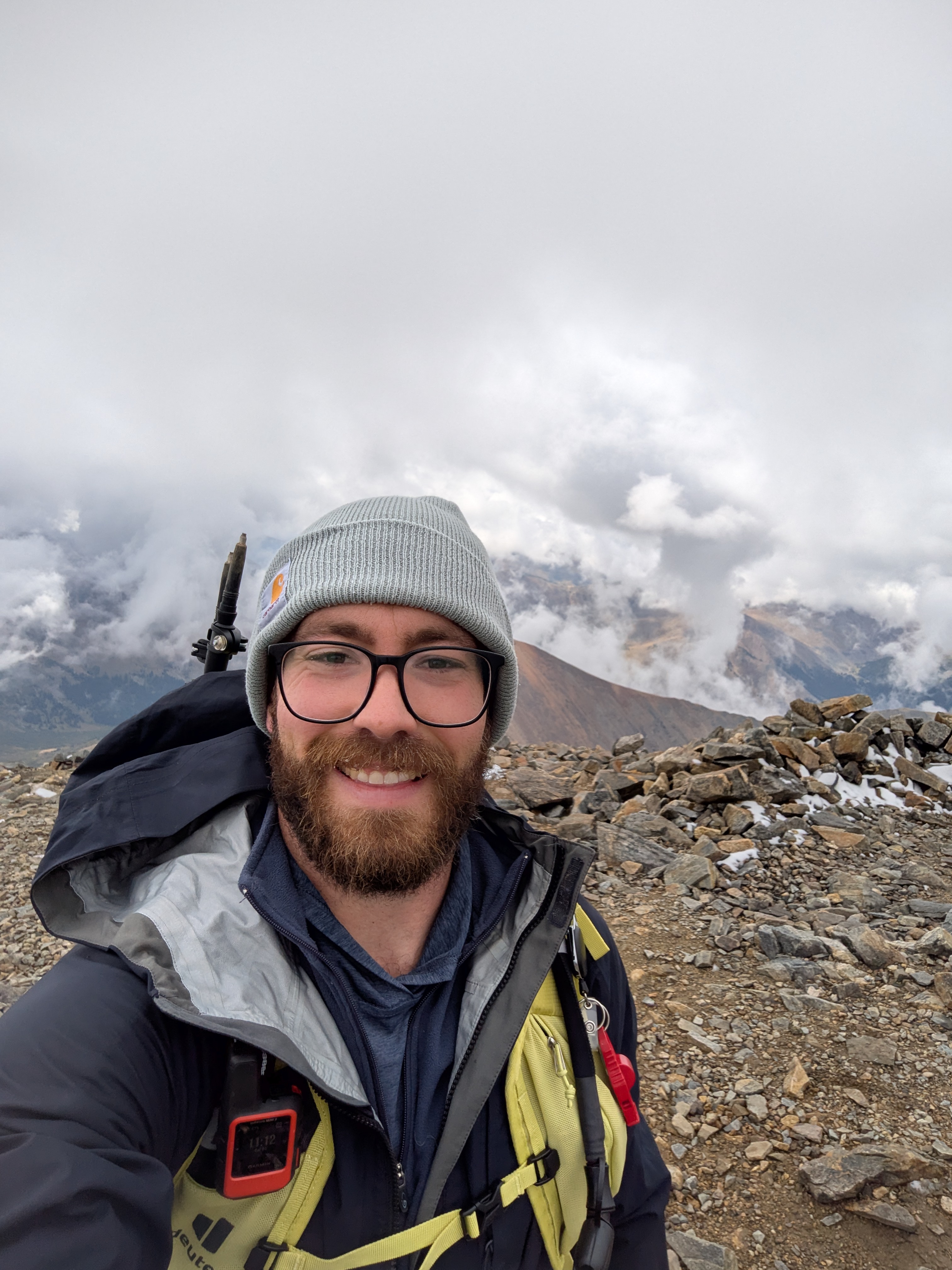
Scott Taylor is the Founder and Executive Director of TrekFreely. A Principal Security Engineer at a large telecommunications company, he has spent fifteen years in technology and most of his life outside.
Scott grew up in a family that took being outside seriously. Camping trips, fishing weekends, long days hiking and birding; being outdoors was the default, not the special occasion. He earned the rank of Eagle Scout, completed all three of the Boy Scouts of America's high adventure trips at Philmont, Northern Tier, and Sea Base, and spent several summers volunteering at Pennsylvania State University's Shavers Creek Environmental Center. The pattern stuck. Two decades later, he's still climbing, backpacking, camping, and getting outside every chance he gets, and over the past six years has gotten deep into amateur radio as a backcountry communications tool, including volunteer work with the Colorado Emergency Repeater Network. Along the way, he earned his Wilderness First Responder certification, the medical training that matters when help is hours away rather than minutes.
In parallel, he built a career in information technology that has increasingly centered on privacy. As a Principal Security Engineer, he protects custom applications and automation pipelines from the kinds of attacks that put user data at risk. Years of bug bounty work on the side have made one thing impossible to ignore: most systems handling personal information aren't built with the people in them as the priority, and the gap between "we take privacy seriously" and "this system was actually designed for privacy" is enormous.
Those two threads collided over the people waiting at home. Scott had always done his trip planning carefully: the routes, the gear, the contingencies. But the information his fiancé actually needed while he was out there was scattered across links, a printed sheet of paper, and a Google Drive folder. Every time he came back, the questions were the same: where was she supposed to look, what did this number mean, when should she have been worried? He'd done everything right on his end and still left her stressed every single trip. That wasn't a personal failing. It was the ecosystem failing. The information existed; it was nowhere near the people who needed it.
That belief, that backcountry safety information should be both genuinely useful and genuinely free, and that the people back home are part of every trip, is what TrekFreely is built around. Scott started it because he wanted the tools he'd needed to exist, and because the alternative answers he kept seeing online — "just google it" on one extreme, fully pre-packaged trip plans on the other — were both failing the community in different ways. He'd rather help people get more capable than make them more dependent.
Built with Search and Rescue in mind
Everything we build is designed with Search and Rescue (SAR) operations in the background. Trip portfolios are structured so that if a search and rescue team needs the information, it is already organized in a way they can use — route, vehicle description, gear colors, medical info, last known check-in, emergency contacts. The goal is to give SAR teams a head start instead of making them piece together the same scattered information that everyone else is struggling with.
We also maintain directories of SAR organizations, sheriff contacts, and ranger stations—supplementary resources for understanding what emergency services are available in the area.
We are not currently partnered with any SAR teams. That is intentional. We want to build something that is reliable and genuinely useful before we ask emergency responders to depend on it. Formal SAR partnerships are on our roadmap, but only once we have earned that trust through the quality of what we have built.
How this stays free
TrekFreely is not a startup. Nobody invested expecting a return. The people who build and run this platform spend their own time in the backcountry, and we believe these tools should exist for everyone — not just for those who can afford them.
Long-term sustainability comes from grants, voluntary donations, and organizational partnerships — not from selling your data or putting features behind a paywall. TrekFreely is a registered 501(c)(3) tax-exempt nonprofit, which opens more funding sources and holds us to a higher standard of transparency. Operating costs are published on our Transparency page and updated as we go.
If you want to help keep TrekFreely running, donations go directly toward infrastructure, development, education content, and conservation.
Our Partners
We are building partnerships with organizations that share our mission. Interested in becoming a partner?
Learn more about our partnerships →Get involved or say hello
We are always looking for volunteers, partners, and people who share this mission. Whether you want to contribute, report an issue, or just introduce yourself — we would love to hear from you.
Get in Touch